
Table of Contents
ToggleTea has a funny way of becoming part of our daily life.
For some, it starts with the sound of a kettle in the morning. For others, it is a cup of masala chai shared with family in the evening. Somewhere else in the world, tea may be prepared slowly in a small clay teapot, whisked into a bright green matcha, or left overnight in cold water.
The tea leaves may be similar, but the way we prepare them can create a completely different experience.
So, what are the different types of tea preparation? From traditional Indian chai to Chinese Gongfu tea and Japanese matcha, there are many ways to turn tea leaves into a comforting cup.
Let us explore some of the most popular tea preparation methods and understand what makes each one special.
Why Do Tea Preparation Methods Matter?
Before we look at the different methods, there is one simple thing to understand: how you prepare tea affects its taste, aroma, strength and texture.
The same tea can taste light and delicate when steeped for a short time. The flavour can become stronger when the leaves are brewed longer. Adding milk and spices can create a rich cup of chai, while cold brewing can produce a smoother and more refreshing drink.
Water temperature, brewing time, the amount of tea and even the type of tea-ware can make a difference.
That is why tea preparation is not just about making a drink. It is part of the tea experience.
1. Boiling Tea – The Indian Chai Method
If you grew up in India, there is a good chance your first memory of tea involves a saucepan.
In many Indian homes, tea is prepared by boiling or simmering tea with water, milk, sugar and sometimes spices. Strong black tea, especially Assam or CTC tea, is often used because it can stand up well to this style of preparation.
The spices may include cardamom, ginger, cinnamon, cloves or black pepper.
The result is a strong, aromatic and comforting cup
How is Indian chai prepared?
Water and spices are first heated together so their flavours can develop. Tea is then added, followed by milk and sugar. I prefer jaggery over sugar. The mixture is simmered before being strained into a cup.
Every household has its own version.
Some prefer more ginger. Some add only cardamom. Others prepare a full masala chai with several spices.
That is what makes Indian chai special. There is rarely one “correct” recipe
2. Steeping – The Classic Tea Brewing Method
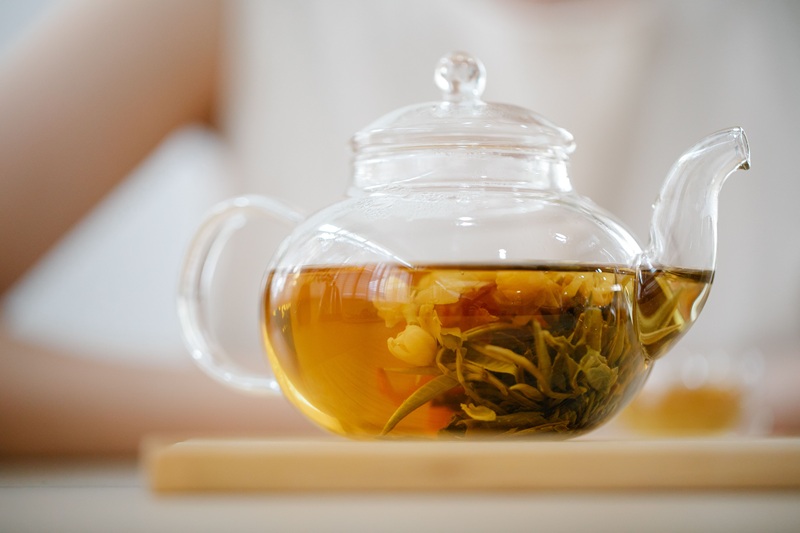
Steeping is probably the simplest and most common type of tea preparation.
Instead of boiling the tea leaves directly, hot water is poured over the leaves and allowed to sit for a few minutes – my father’s favourite method.
Once the tea has reached the desired strength, the leaves are removed.
This method is commonly used for green, black, white and oolong tea.
The important part is controlling the water temperature and steeping time.
For example, delicate green and white teas usually need cooler water than black tea. Using water that is too hot can make delicate teas taste bitter.
Steeping allows the natural character of the tea to come through. You can enjoy the floral notes of white tea, the grassy character of green tea or the rich body of black tea.
3. Gongfu Tea – Short and Repeated type of tea preparation
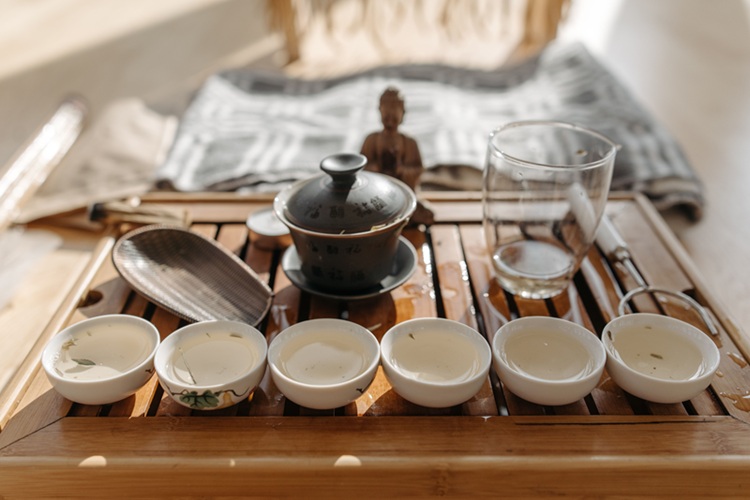
Now let us travel to China.
The Gongfu tea method takes a very different approach. Instead of using a large amount of water and a single long infusion, a relatively large quantity of tea leaves is used with a small teapot or gaiwan.
The leaves are infused for short periods, sometimes only a few seconds.
The same leaves can then be infused several times.
Each infusion may reveal a different flavour.
This type of tea preparation is especially popular with teas such as oolong tea, Pu-erh tea and some Chinese green teas.
Gongfu preparation is not about rushing. It encourages you to notice the aroma, colour and changing flavours of the tea.
4. Tea Bag Preparation – Simple and Convenient
Not every cup of tea needs special equipment.
For many people, preparing tea with the tea bag method is the easiest type of tea preparation. Place the bag in a cup, add hot water and allow it to steep for the recommended time.
It is quick, clean and convenient and very popular in offices worldwide.
Tea bags are commonly used for black, green, herbal tea and flavoured tea blends.
The key is not to leave the tea bag in for too long, especially when preparing delicate teas. Over-steeping can make the drink stronger and sometimes more bitter than intended.
For a busy morning, however, convenience often wins.
Cold Brew Type of Tea Preparation – A Slow and Refreshing Method
Imagine preparing your tea without boiling water at all.
That is the idea behind cold brew tea.
Tea leaves are placed in cold or room-temperature water and left to infuse in the refrigerator for several hours. Because the extraction happens slowly, the resulting tea can taste smoother and less bitter.
Cold brewing works especially well for green tea, white tea, fruit blends and some herbal teas.
It is an excellent choice for summer. Add ice, lemon, mint or fresh fruit, and you have a refreshing tea drink ready to enjoy.
6. Matcha Type of Tea Preparation – Whisking Instead of Steeping
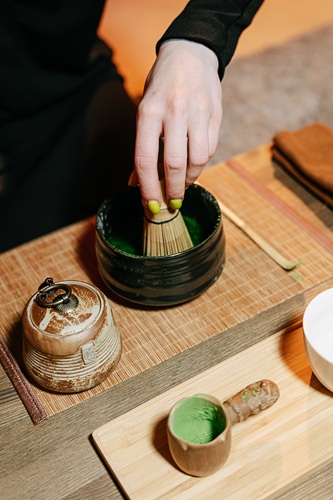
Matcha is different from most teas.
Instead of steeping leaves and removing them, matcha green tea is made from finely ground tea leaves. The powder is mixed directly with water.
This is a traditional Japanese matcha method. In this type of tea preparation, a bamboo whisk is used, which is called a chasen.
A small amount of matcha is placed in a bowl. Hot water is added, and the tea is whisked until it becomes smooth and lightly frothy.
The result is a vibrant green drink with a rich, earthy flavour.
Why is matcha a type of tea preparation different?
Because you consume the powdered tea itself rather than drinking only the water that has extracted flavour from the leaves.
Traditional Japanese tea preparation is also closely connected with mindfulness, hospitality and the Japanese tea ceremony.
7.Tea Latte – Tea with Steamed Milk
Tea does not always have to be served black.
A tea latte combines strongly brewed tea with warm or steamed milk. Matcha latte, chai latte and Earl Grey latte are popular examples.
The tea is usually prepared first and then combined with milk.
The result is creamy, smooth and filling.
This method has also helped introduce tea to people who may not normally drink traditional brewed tea.
8.Masala Chai – When Tea Becomes a Spice Story
Although masala chai can be considered a type of Indian boiled tea, it deserves special mention.
Think about a rainy evening. Ginger, cardamom and cinnamon are simmering in a saucepan. The aroma slowly fills the kitchen. Tea and milk are added, and within minutes, the whole room feels warmer.
That is the magic of masala chai.
There is no single recipe. Families and regions have their own versions, with different combinations of spices, milk and sweetness.
The preparation itself becomes part of the experience.
Which Type of Tea Preparation Method Should You Choose?
There is no single best way to prepare tea.
If you want a strong and comforting drink, try Indian chai or masala chai.
If you want to enjoy the leaves’ natural flavour, choose steeping.
For a deeper tea experience, try Gongfu preparation.
If you want something refreshing, cold brew tea is worth trying.
And if you enjoy a creamy drink, a tea latte or matcha latte may be perfect.
The best method depends on the tea, your taste and the moment.
A Cup of Tea, Your Way
I often think that the way we prepare tea tells us something about how we live.
Sometimes we need a quick tea bag before starting a busy day. Sometimes we want the comfort of a slowly simmered masala chai, especially in the rainy season. And sometimes, we simply want to sit quietly with a small cup of carefully prepared tea.
The leaves may be small, but the possibilities are surprisingly large.
So the next time you make tea, try changing the method. Change the water temperature. Try loose leaves instead of a tea bag. Add spices. Try cold brewing. Or take your time with a traditional preparation.
You may discover that your favourite tea was waiting for you in a different way all along.
After all, great tea is not only about the leaves. It is also about how you prepare them, how you enjoy them and the moments you create around every cup.
FAQs
Lorem ipsum dolor sit amet, consectetur adipiscing elit. Ut elit tellus, luctus nec ullamcorper mattis, pulvinar dapibus leo.
1. What are the different types of tea preparation?
The main types include boiling, steeping, tea bag preparation, Gongfu tea, cold brewing, matcha preparation and tea latte preparation.
2. What is the most common method of preparing tea?
Steeping is one of the most common methods. Hot water is poured over tea leaves or a tea bag and allowed to infuse for a few minutes.
3. What is the Indian method of preparing tea?
Indian chai is commonly prepared by boiling or simmering tea with water, milk, sugar and, in some recipes, spices such as ginger, cardamom and cinnamon
4. What is Gongfu tea preparation?
Gongfu tea is a Chinese brewing method that uses a relatively high amount of tea leaves, a small teapot or gaiwan, and several short infusions.
5. Is cold brew tea better than hot brewed tea?
Neither method is necessarily better. Cold brewing produces a smoother and often less bitter drink, while hot brewing can bring out stronger aromas and flavours.
6. How is matcha different from regular tea?
Matcha is made from finely ground tea leaves. The powder is whisked directly into water rather than being steeped and removed.
7. Which tea preparation method is best for green tea?
Steeping is generally a good choice for green tea. Using water that is not excessively hot and avoiding very long steeping can help preserve its delicate flavour.
8. What is the best way to prepare masala chai?
A common method is to simmer spices in water, add black tea, then add milk and sugar, and finally simmer and strain the chai. The exact recipe can vary by household and region.
Pingback: Monsoon Tea Guide: Best Teas for Rainy Days